
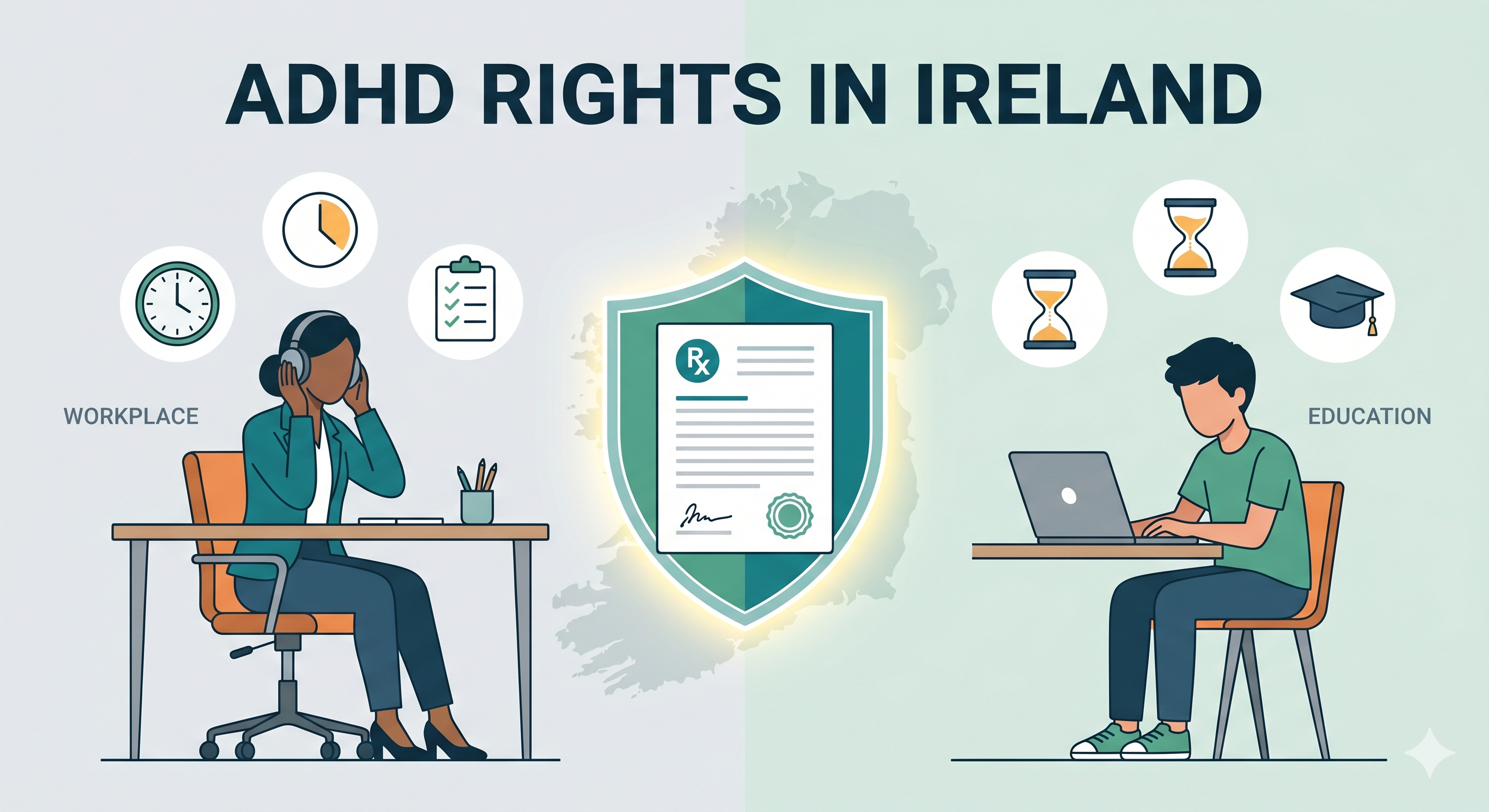

For many adults and parents of children with ADHD, the term "disability" can feel like a heavy label. However, in a legal and functional sense, understanding whether is ADHD a recognised disability in Ireland is the key to unlocking essential supports and protections.
In Ireland, ADHD is legally regarded as a disability under several core pieces of legislation. This classification is not meant to define your potential, but rather to ensure that you—or your child—have a level playing field in education and the workplace.
The Legal Framework: ADHD as a Disability
In Ireland, the definition of disability is intentionally broad. Under the Employment Equality Acts (1998–2015) and the Equal Status Acts (2000–2018), a disability includes "a condition, illness or disease which affects a person's thought processes, perception of emotions or judgement or which results in disturbed behaviour."
Because ADHD is a neurodevelopmental condition that affects executive function, focus, and emotional regulation, it falls clearly within this definition. This legal recognition protects individuals from discrimination and grants the right to "Reasonable Accommodations."
Rights in the Workplace: Employment Equality
If you are an adult with ADHD in the Irish workforce, the Employment Equality Acts protect you from being treated less favourably than a colleague without ADHD.
What are Reasonable Accommodations?
Employers in Ireland are required to take "appropriate measures" to enable a person with a disability to have access to employment, to participate or advance in employment, and to undergo training.
In the context of ADHD, Reasonable Accommodations might include:
Environmental Changes: Providing a quiet workspace or noise-cancelling headphones to manage distractibility.
Flexible Working: Allowing for adjusted start/finish times or remote work options.
Task Management: Providing written instructions following verbal meetings to assist with working memory.
Software Tools: Providing access to project management software or text-to-speech tools.
Employers are required to provide these unless the measures would impose a "disproportionate burden" (financial or otherwise) on the business.
Rights in Education: The Equal Status Acts
For students in primary, secondary, or third-level education, the Equal Status Acts ensure that schools and universities do not discriminate during admission or in the way they provide education.
Supporting Students with ADHD
Under these acts, educational institutions must provide "reasonable accommodations" to ensure students with ADHD can participate fully in school life. This often includes:
The DARE Scheme: The Disability Access Route to Education (DARE) allows students with an ADHD diagnosis to apply for college places on reduced points.
Exam Accommodations (RACE): This might include extra time in State Exams (Junior Cycle/Leaving Cert), a separate quiet room, or the use of a laptop.
SNA Support: In primary and secondary schools, access to Special Needs Assistant (SNA) support or specialized teaching hours.
How to Exercise Your Rights
To access these protections, a formal diagnosis from a Consultant Psychiatrist is almost always required. Whether it is an application for the DARE scheme or a formal request for accommodations to an HR department, a clinical report serves as the essential evidence of need.
Secure Your Documentation: Ensure you have a comprehensive report from a registered specialist that outlines your diagnosis and specific recommendations for support.
Disclosure is a Choice: In the workplace, you are not legally required to disclose your ADHD unless you are seeking accommodations or if the condition poses a safety risk in your specific role.
Initiate the Dialogue: Once you have your diagnosis, you can approach your employer or school's disability office to discuss which accommodations would be most effective for your specific "ADHD profile."
Summary
So, is ADHD a recognised disability in Ireland? Yes. While many prefer the term "neurodivergence," the legal classification as a disability is a powerful tool. It ensures that the Irish state, employers, and educators recognize that your brain works differently—and that you have a legal right to the environment you need to succeed.
Consultant’s Note: If you require a clinical report for workplace accommodations or a DARE application, our assessment process includes the specific documentation required by the State and educational bodies.